
cybersecurity • August 16, 2026
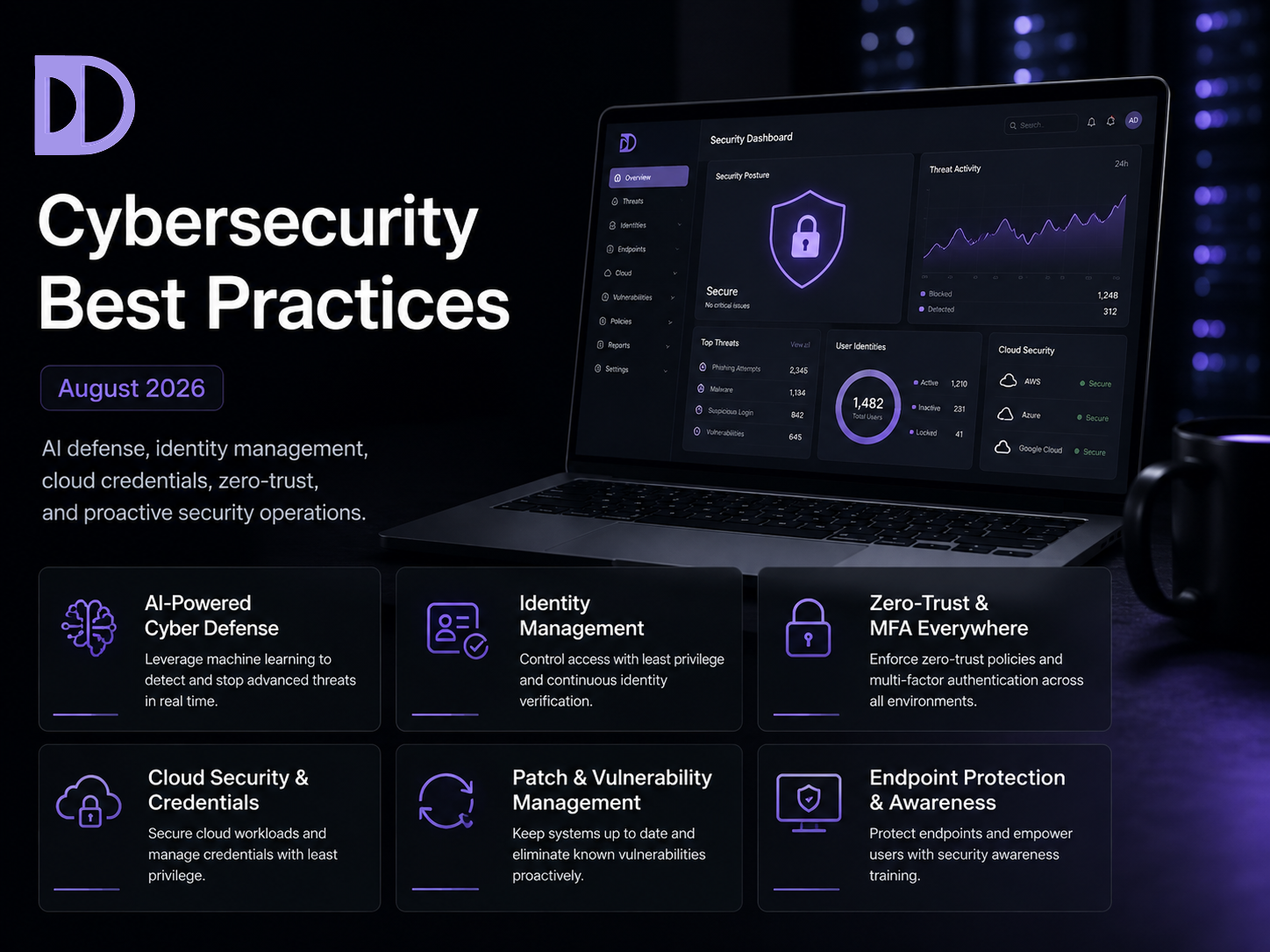
The cybersecurity landscape continues to evolve at a rapid pace, with artificial intelligence emerging as both a powerful defensive tool and a new vector for sophisticated attacks. Organizations are increasingly turning to AI to augment their security operations, automate threat detection, and respond to incidents at machine speed. This shift represents a fundamental change in how security teams approach risk management, moving from reactive protocols to proactive, intelligence-driven strategies that can adapt in real time to emerging threats.
Alongside the rise of AI-driven security, traditional pillars of protection such as identity management and cloud security remain critically important. Recent developments highlight significant updates in how organizations are managing access controls, securing critical infrastructure, and preparing their workforce with the necessary certifications. Staying informed about these changes ensures that security programs are not only current but also resilient against the diverse threat landscape facing businesses today.
Artificial intelligence is reshaping the cybersecurity frontier, offering capabilities that were unimaginable just a few years ago. From predictive analytics that identify potential vulnerabilities before they are exploited to automated response systems that contain threats in seconds, AI is becoming the backbone of modern defense strategies. Governments and private sectors alike are investing heavily in these technologies, recognizing that human alone cannot keep pace with the velocity and complexity of modern cyber threats. The integration of machine learning models allows for the analysis of vast datasets, uncovering patterns and anomalies that signal an attack in its earliest stages.
A notable example of this trend is the recent announcement by California Governor Newsom regarding a new AI cyber defense program designed to protect the state's critical infrastructure. This initiative underscores the growing recognition of AI's role in safeguarding essential services and highlights a public-private partnership model that other states may soon emulate. Such programs typically leverage AI to monitor network traffic, detect irregular behavior, and coordinate rapid responses to incidents targeting power grids, water systems, and healthcare networks. For businesses, the lesson is clear: incorporating AI into your security stack is no longer optional but a necessity for maintaining a strong defensive posture.
Identity management remains the frontline defense against unauthorized access, and the strategies surrounding it are becoming increasingly sophisticated. The focus has shifted from simple password policies to comprehensive frameworks that include multi-factor authentication, zero-trust architectures, and continuous verification. These approaches assume that no user or device should be trusted by default, even if they are already inside the network perimeter. By requiring constant validation of identity and device health, organizations can significantly reduce the risk of credential theft and lateral movement by attackers.
Recent industry news for the week of August 14th reveals activity across several major players in the identity space. Updates from providers like Keeper Security and Privacy Bee, as well as changes to popular communication platforms like WhatsApp, illustrate the dynamic nature of how we secure digital identities. These updates often bring new capabilities for encrypted storage, biometric integration, and more granular control over who can access specific resources. For IT professionals, keeping abreast of these changes is essential for updating organizational policies and ensuring that user access aligns with the principle of least privilege.
As organizations continue their migration to the cloud, the demand for skilled professionals who can secure these environments has surged. Cloud security is a specialized field that requires a deep understanding of shared responsibility models, cloud-native tooling, and the specific compliance requirements of various industries. Investing in certifications not only validates a professional's expertise but also provides a structured learning path to mastering the complexities of cloud platforms like AWS, Azure, and Google Cloud. For businesses, having a certified team means a lower risk of misconfigurations that could lead to data breaches.
The available landscape of certifications for 2026 offers a wide range of options for both beginners and seasoned experts. Curated lists highlight the most relevant and up-to-date credentials, ensuring that professionals are learning skills that apply to current cloud architectures and threat landscapes. Whether focusing on foundational security concepts or advanced threat hunting in cloud environments, these certifications provide the knowledge needed to protect critical data and applications. For individuals looking to advance their careers, this is an opportune time to specialize in a high-growth, high-reward area of IT.
Major technology vendors are constantly refining their approaches to security, and Microsoft's latest guidance invites organizations to reconsider their cyber defense postures. The software giant has been vocal about the need for a shift in mindset, moving away from perimeter-based security toward more holistic, data-centric strategies. This involves a deeper integration of security into the development lifecycle, known as DevSecOps, and a greater emphasis on visibility across hybrid environments. By embedding security controls directly into the software and infrastructure, Microsoft aims to make security an enabler of innovation rather than a bottleneck.
The core of Microsoft's message revolves around the idea that defense is a shared responsibility that extends beyond the security team to every developer and IT operator. This approach encourages the use of built-in security features, such as advanced threat protection and identity management tools, to create a more resilient overall ecosystem. For enterprises, this means reevaluating existing stacks to ensure they are leveraging the full spectrum of available protections. The goal is to create a culture where security is intuitive, proactive, and aligned with business objectives.
The development of cutting-edge AI models often walks a fine line between innovation and safety, and recent decisions by leading AI labs illustrate this tension. In a move driven by security concerns, OpenAI has paused certain development activities related to its Astra model. This decision reflects a growing industry awareness that the rapid deployment of powerful AI capabilities requires rigorous safety testing and risk assessment. It is a prudent step that prioritizes the integrity and safety of the technology over the speed of release, ensuring that potential vulnerabilities are addressed before the technology reaches wider audiences.
Such pauses are becoming more common as the AI industry matures and the stakes of deployment get higher. By taking the time to thoroughly evaluate security implications, companies can avoid costly recalls or reputational damage down the line. For developers and researchers, this environment emphasizes the importance of building safety by design, integrating ethical considerations and robustness checks into the earliest stages of model training. It serves as a reminder that the most advanced technology is only valuable if it can be trusted to operate safely and responsibly.
The threat landscape is in a constant state of flux, with new vulnerabilities being discovered across various platforms and devices. Recent reports have highlighted exploits targeting operating system features, such as a macOS screen sharing vulnerability that was leveraged by hackers to mine cryptocurrency. These types of incidents serve as a stark reminder that no system is immune to attack, and that even features designed for user convenience can be repurposed maliciously. Staying informed about these specific hardware and software vulnerabilities is crucial for IT teams tasked with patch management and system hardening.
These exploits often rely on social engineering or specific user interactions to gain a foothold, making user education a vital component of any security strategy. When a vulnerability is discovered, the race is on between security researchers developing patches and threat actors developing exploit code. For organizations, having a robust patch management process and a policy of regular system updates is the best defense against these emerging risks. It also underscores the value of employing endpoint detection and response (EDR) tools that can identify suspicious behavior even if the initial entry point is through a seemingly legitimate feature.
Cybersecurity in 2026 demands a multi-faceted approach that leverages the latest technology while adhering to fundamental security principles. The integration of AI offers unprecedented capabilities for threat detection and response, but it must be balanced with robust identity management and careful attention to cloud security configurations. As we have seen from recent industry updates, the landscape is characterized by rapid innovation alongside the discovery of new vulnerabilities, making continuous learning and adaptation essential for every organization.
For businesses and IT professionals, the key takeaway is to view security not as a one-time project but as an ongoing process of improvement. By investing in certifications, adopting zero-trust frameworks, and staying informed about vendor developments, teams can build more resilient defenses against the diverse array of threats they face. The future of cybersecurity will likely see even deeper integration of intelligent systems, but the human element of policy, education, and vigilance will always remain the cornerstone of a secure digital environment.
More From the Blog
Contact Me
for any advice
